Translate

Car Sharing... the Future?

I like everything in my car to be set just right. The climate needs to be at my perfect temp, at all times. I don’t want anyone else messing with my air conditioning. So, quit turning my AC Compressor on and off, and stop putting my AC Parts through so much wear and tear. You may think that I am super anal and you are super correct. Due to this, I am not a good candidate for a car sharing programs, but it might be the right fit for you.

The first evidence of car sharing goes back to 1948. The idea of sharing vehicles has come and gone several times, lacking the ability to stick. No one has seemed to be able to get it right. That has not stopped the fad from, once again, coming back. However, this time there is a new approach.

There is the old car sharing business model; a company owns a whole fleet of cars and members can rent those cars for a few hours or an entire day. Zipcar is the largest of these corporations with 650,000 members, who proudly refer to themselves as “Zipsters.”I wonder if Zipsters wear their seatbelts extremely tight around their tight hipster jeans. Zipcar has almost 10,000 vehicles in 19 major cities. They account for 80% of the car sharing market.
The new car share method is a peer-to-peer model. The company doesn’t actually own the vehicles. Instead, members share each other’s cars. Everything else is basically the same. This seems like a great business idea because it eliminates fleet maintenance, which is a massive expenditure. The tough part is getting members to trust their car with strangers. To ease members’ worries companies run background checks, and provide insurance.

The big companies that operate a peer-to-peer style are Getaround and RelayRides. General Motors just invested in RelayRides and will use OnStar to help members find and track vehicles. GM acknowledges that a car share program causes less people to buy automobiles, but reports state that there will be 4.4 million people participating in car share programs by 2016. GM wants to be the company that supplies those cars.
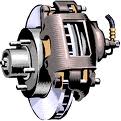
Automobile Brakes/Car Brakes/Vehicle Brakes/What You Should Know

Front brake Assembly
What you should know about your car and truck brakes may surprise you. Most vehicle brakes are run by a hydraulic system which under pressure will slow or stop your car. Below I will go over some points to remember when it comes to your car or truck brakes. Some people believe that all you have to do is drive the vehicle until you hear noises coming from your wheels. By that time it is to lste for a normal routine brake job you see advertised all over the place. Here are some brake tips you should know as you are out cruising around town.


Brake Pulsation:

Brake Inspection
Your automobile brakes have brake rotors in the front and most of the time you have brake drums on the rear of the vehicle. When your brake rotors and brake drums heat up you creat a hot spot which will cause these two components to over heat and expand. Some times you can have the brake rotors and brake drums machined cut to fix this brake pulsation problem or you can just have the brake rotors and brake drums replaced.


Brake Squeaking:
Seventy percent of your braking is coming from your front brakes while the remaining thirty percent is coming from the reaes. Your front brake pads are equipped with squealers to let you know to have them inspected right away before you start rubbing metal on metal. which can be quite costly. If you get them inspected right away all you may be looking at is just a brake pad replacement and resurfacing the rotors. If you choose to ignore the noise then plan on replacing the brake rotors, brake hardware, and possibly a brake caliper or two.
Heaed up Brakes


Use Your Parking Brake as Much as Possible:
Most drivers out there will ignore using their parking brake every time they park their vehicles. The parking brake Is designed to help adjust the front and rear brakes evenly. If you do not apply the parking brakes then your brake cables will rust and freeze up not allowing your brakes to be applied evenly.

ASE Brake Technician

Flush Out Your Brake Fluid:
Unflushed brake fluid will turn into sludge and will not perform its duties. The rubber parts, seals, et. will start to leak and will not give you the stopping power that you need. Brake fluid is not suppose to boil when it gets hot. Here are just a few pointers you can keep.


Keywords: brakes, front brakes, rear brakes, cars and trucks, vehicles, .

10 Things to NOT Put Off!

With more and more used cars on the road today it isespecially important to keep up with regular car maintenance. At some point downthe road parts like the AC compressor or a fuel injector may unfortunately gobad, but there are certain things that every driver should keep an eye on toavoid unexpected car fails. The first of these are the brakes because oursafety is dependent on them. Brake failure is easily avoided by checking thefluid regularly and by replacing it every 24,000 miles. In addition to thefluid, the pads should be changed out depending on their condition and use. Just because they still make your car come to a stop, does not mean they don't need any help!

Other safety-related parts to keep an eye on are the tires.It’s easy to ignore tires that don’t have enough tread because you don’t wantto drop that extra cash on a new set. However, this can be extremely dangerousand you may leave yourself hurt or stranded because of neglect. A typicaltime-frame for tire replacement is 6-10 years, although it obviously depends on their wear. An easy test to check a tire's condition is to put an upside-down penny between the treads. If you can see thetop of the president’s head, time for a new tire! Check out the rest of a top10 car maintenance checklist below!
  1. Brakes: Fluid 2 years or 24,000 miles
  2. Tires: Dependent on use; roughly 6-8 years
  3. Coolant: 2 years or 24,000 miles
  4. Engine Belt & Timing Belts: 3 years or36,000 miles (Engine Belts) & 60,000-90,000 miles (timing belt)
  5. Spark Plugs: Every 30,000-100,000 miles
  6. Automatic Trans Fluid & Filter: Every 2years or 24,000 miles
  7. Air Filter: 12 months/12,000 miles or asneeded
  8. Battery: 48-60 months or as needed
  9. Power-Steering Fluid: Top off as needed,inspect level with every oil change
  10. Fuel Filter: Every 2 years or 24,000 miles


Related Posts Plugin for WordPress, Blogger...