Translate

Showing posts with label IBM nanotechnology. Show all posts

IBM Scientists Create a One-Step Point-of-Care-DiagnosticTest,

IBM scientists have created a one-step point-of-care-diagnostic test, based on an innovative silicon chip, that requires less sample volume, is significantly faster, portable, easy to use, and can test for many diseases, including one of world's leading causes of death, cardiovascular disease*. The results are so quick and accurate that a small sample of a patient’s serum or blood, could be tested immediately following a heart attack, to enable the doctor to quickly take a course of action to help the patient survive. (*According to the World Health Organization Statistics 2009)

As reported in Lab on a Chip, December 2009, Volume 9, Issue 23, IBM Research - Zurich scientists Luc Gervais and Emmanuel Delamarche, in collaboration with the University Hospital of Basel in Switzerland, have developed a new diagnostic test that uses capillary forces to analyze tiny samples of serum, or blood, for the presence of disease markers, which are typically proteins that can be detected in people’s blood for diagnostic purposes. Capillary action force is the tendency of a liquid to rise in narrow tubes or to be drawn into small openings. An everyday example of a capillary action force can be viewed by dipping a paper towel in a cup of water - the microstructures in the paper fiber enable the towel to absorb the water.

"This point of care test has achieved the trifecta for medical staff in that it is portable, fast and requires a very small volume of sample," comments Emmanuel Delamarche, scientist, IBM Research - Zurich. "We are giving back precious minutes to doctors so they can make informed and accurate decisions right at the time they need them most to save lives".

IBM scientists have encoded the forces of capillary action on a microfluidic chip made of a silicon compound, similar to those used in computer chips, thus leveraging IBM's vast experience in developing and manufacturing silicon semiconductor wafers. The chip, which measures 1 × 5 centimeters, contains sets of micrometer wide channels where the test sample flows through in approximately 15 seconds, several times faster then traditional tests. Uniquely, the filling speed can be adjusted to several minutes when the chip requires additional time to read a more complex disease marker.

The microfludic chip, which is based on nearly three years of research and development, consists of a microscopic path for liquids with five innovative stages:

Stage 1: A one microliter sample, 50 times smaller than a tear drop, is pipetted onto the chip, where the capillary forces begin to take effect

Stage 2: These forces push the sample through an intricate series of mesh structures, which prevent clogging and air bubbles from forming

Stage 3: The sample then passes in a region where microscopically small amounts of the detection antibody have been deposited. These antibodies have a fluorescent tag and similar to the antibodies within our body, they recognize the disease marker and attach to it within the sample. Only seventy picoliters (a volume one million times smaller than a tear) of these antibodies are used, making their dissolution in the passing sample extremely fast and efficient.

Stage 4: The most critical stage is called the "reaction chamber" and it measures 30 micrometers in width and 20 micrometers in depth, roughly the diameter of a strand of human hair. Similar to a common pregnancy test, in this stage the disease marker that was previously tagged is captured on the surface of the chamber. By shining a focused beam of red light, the tagged disease markers can be viewed using a portable sensor device that contains a chip similar to those used by digital cameras, albeit this one being much more sensitive. Based on the amount of light detected, medical professionals can visually confirm the strength of the disease marker in the sample to determine the next course of treatment.

Stage 5: Less a stage and more a part of the entire process is the capillary pump. The capillary pump, which has a depth of 180 micrometers, contains an intricate set of microstructures, the job of which is to pump the sample through the device for as long as needed and at a regular flow rate, just like the human heart. This pump makes the test accurate, portable and simple to use. IBM scientists have developed a library of capillary pumps so that tests needing a variety of sample volumes or test times can still be done without having to re-engineer the entire chip.
 
True to IBM's strategy of open collaboration, scientists in Zurich tested their ideas with academic and healthcare partners. This research also would not have been possible without the generous support of KTI/CTI, an organization which fosters innovation in Switzerland.

"This microfluidic chip is the next step in the evolution of point of care devices. We look forward to working with the scientists at IBM Research - Zurich to develop this innovation even further," said Thierry Leclipteux, Chief Executive Officer and Chief Science Officer, Coris BioConcept.

IBM scientists designed the chip with flexibility in mind in both its form and uses. Due to its small size the chip can be embedded in several types of form factors, depending on the application, including a credit card, a pen or something similar to a pregnancy test. Besides diagnosing diseases, the test is also flexible enough to test for chemical and bio hazards.

From a technological perspective, IBM has been a pioneer in nanoscience ever since the development of the Nobel Prizing winning Scanning Tunneling Microscope in 1981. Ever since, IBM researchers have been pushing the frontiers of scientific knowledge and manipulating at the nano scale and our work in one-step point-of-care diagnostics is a direct result of this effort. IBM is currently embarking on a grand vision called smarter planet helping industries, such as healthcare become more instrumented, interconnected and intelligent.

IBM’s track record of improving heatlhcare through scientific achievements and collaboration with healthcare companies dates back to the 1950s. In the last decade, IBM has developed a national digital mammography archive with the University of Pennsylvania; developed a clinical trial participant system with the Mayo Clinic; collaborated with Scripps to understand how influenza viruses mutate and proactively develop treatments; collaborated with European universities to develop better methods to decide on antiretroviral therapies for HIV; launched the World Community Grid, which has done projects on cancer, aids, dengue fever; and much more.

The scientific paper entitled "Toward one-step point-of-care immunodiagnostics using capillary-driven microfluidics and PDMS substrates" by Luc Gervais and Emmanuel Delamarche, appears in Lab on a Chip, Volume 9, Issue 23, pp. 3330 to 3337 (December 2009)

About Coris
A biotechnology company developing rapid tests for diagnosis of enteric and respiratory pathogens. For more information visit www.corisbio.com/
IBM Blue Gene® Compact, Low-Power Synaptronic Chip Using Nanotechnology

At SC 09, the supercomputing conference, IBM announced significant progress toward creating a computer system that simulates and emulates the brain’s abilities for sensation, perception, action, interaction and cognition, while rivaling the brain’s low power and energy consumption and compact size.

The cognitive computing team, led by IBM Research, has achieved significant advances in large-scale cortical simulation and a new algorithm that synthesizes neurological data -- two major milestones that indicate the feasibility of building a cognitive computing chip.

BlueMatter


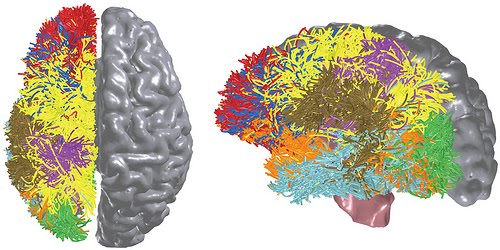
BlueMatter, a new algorithm created in collaboration with Stanford University, exploits the Blue Gene supercomputing architecture in order to noninvasively measure and map the connections between all cortical and sub-cortical locations within the human brain using magnetic resonance diffusion weighted imaging. Mapping the wiring diagram of the brain is crucial to untangling its vast communication network and understanding how it represents and processes information.
Image Credit: IBM

Scientists, at IBM Research - Almaden, in collaboration with colleagues from Lawrence Berkeley National Lab, have performed the first near real-time cortical simulation of the brain that exceeds the scale of a cat cortex and contains 1 billion spiking neurons and 10 trillion individual learning synapses.

Additionally, in collaboration with researchers from Stanford University, IBM scientists have developed an algorithm that exploits the Blue Gene® supercomputing architecture in order to noninvasively measure and map the connections between all cortical and sub-cortical locations within the human brain using magnetic resonance diffusion weighted imaging. Mapping the wiring diagram of the brain is crucial to untangling its vast communication network and understanding how it represents and processes information.

These advancements will provide a unique workbench for exploring the computational dynamics of the brain, and stand to move the team closer to its goal of building a compact, low-power synaptronic chip using nanotechnology and advances in phase change memory and magnetic tunnel junctions. The team’s work stands to break the mold of conventional von Neumann computing, in order to meet the system requirements of the instrumented and interconnected world of tomorrow.

As the amount of digital data that we create continues to grow massively and the world becomes more instrumented and interconnected, there is a need for new kinds of computing systems – imbued with a new intelligence that can spot hard-to-find patterns in vastly varied kinds of data, both digital and sensory; analyze and integrate information real-time in a context-dependent way; and deal with the ambiguity found in complex, real-world environments.

Businesses will simultaneously need to monitor, prioritize, adapt and make rapid decisions based on ever-growing streams of critical data and information. A cognitive computer could quickly and accurately put together the disparate pieces of this complex puzzle, while taking into account context and previous experience, to help business decision makers come to a logical response.

“Learning from the brain is an attractive way to overcome power and density challenges faced in computing today,” said Josephine Cheng, IBM Fellow and lab director of IBM Research - Almaden. “As the digital and physical worlds continue to merge and computing becomes more embedded in the fabric of our daily lives, it’s imperative that we create a more intelligent computing system that can help us make sense the vast amount of information that's increasingly available to us, much the way our brains can quickly interpret and act on complex tasks.”

To perform the first near real-time cortical simulation of the brain that exceed the scale of the cat cortex, the team built a cortical simulator that incorporates a number of innovations in computation, memory, and communication as well as sophisticated biological details from neurophysiology and neuroanatomy. This scientific tool, akin to a linear accelerator or an electron microscope, is a critical instrument used to test hypotheses of brain structure, dynamics and function. The simulation was performed using the cortical simulator on Lawrence Livermore National Lab’s Dawn Blue Gene/P supercomputer with 147,456 CPUs and 144 terabytes of main memory.

The algorithm, when combined with the cortical simulator, allows scientists to experiment with various mathematical hypotheses of brain function and structure of how structure affects function as they work toward discovering the brain’s core computational micro and macro circuits.

After the successful completion of Phase 0, IBM and its university partners were recently awarded $16.1M in additional funding from the Defense Advanced Research Projects Agency (DARPA) for Phase 1 of DARPA’s Systems of Neuromorphic Adaptive Plastic Scalable Electronics (SyNAPSE) initiative. This phase of research will focus on the components, brain-like architecture and simulations to build a prototype chip. The long-term mission of IBM’s cognitive computing initiative is to discover and demonstrate the algorithms of the brain and deliver low-power, compact cognitive computers that approach mammalian-scale intelligence and use significantly less energy than today’s computing systems. The world-class team includes researchers from several of IBM’s worldwide research labs and scientists from Stanford University, University of Wisconsin-Madison, Cornell University, Columbia University Medical Center and University of California- Merced.

“The goal of the SyNAPSE program is to create new electronics hardware and architecture that can understand, adapt and respond to an informative environment in ways that extend traditional computation to include fundamentally different capabilities found in biological brains,” said DARPA program manager Todd Hylton, Ph.D.

Modern computing is based on a stored program model, which has traditionally been implemented in digital, synchronous, serial, centralized, fast, hardwired, general-purpose circuits with explicit memory addressing that indiscriminately over-write data and impose a dichotomy between computation and data. In stark contrast, cognitive computing – like the brain – will use replicated computational units, neurons and synapses that are implemented in mixed-mode analog-digital, asynchronous, parallel, distributed, slow, reconfigurable, specialized and fault-tolerant biological substrates with implicit memory addressing that only update state when information changes, blurring the boundary between computation and data.

For more information about IBM Research, please visit www.ibm.com/research.

Technical insight and more details on the SyNAPSE project and recent milestones can also be found on the Cognitive Computing blog at http://modha.org/.

The views and conclusions contained in this document are those of the authors and should not be interpreted as representing the official policies, either expressly or implied, of the Defense Advanced Research Projects Agency or the U.S. Government.
Related Posts Plugin for WordPress, Blogger...